ask kate
Ask Kate: Am I Taking Too Many Supplements?
Question: I’m following the supplements list for my condition recommended in MM’s book Cleanse To Heal. There are so many


Do you use table salt on an everyday basis? Most people do. Salt is an important condiment to have on hand in many kitchens as it enhances the flavor and taste of many cooked dishes. Without salt, many people may find a dish tasteless and unpalatable.
The sodium (which makes up about 40%) in salt (otherwise known as sodium chloride) helps keep our bodies functioning by transmitting nerve impulses, contracting and relaxing muscle fibers, and maintaining proper fluid balance. Our kidneys regulate the body’s sodium level by getting rid of any excess. However when there’s too much sodium in our bloodstream, our kidneys can’t keep up. Excess sodium in the blood pulls out water from the cells; as this fluid increases, so does our blood volume. That means more work for the heart, increased pressure in the blood vessels, and often, eventually, stiffened vessel walls, chronic high blood pressure, and an increased risk of heart attack or stroke.
It is therefore no wonder that the American DASH diet & American Heart Association recommends no more than 1500mg salt per day, which translates into 2/3 of a teaspoon. Our own HealthHub.sg recommends a daily limit of 2000mg, which translates into 1 teaspoon. While there is no recommended daily limit if you are following the Medical Medium nutritional protocol, Anthony William does however recommend that those who are healing from chronic illnesses refrain from adding table salt to their diet and instead rely on sodium from sources like seaweeds (such as that from Dulse) and mineral salts that naturally occurring in celery to maintain a healthy body system.
The infographic below summarizes sources of sodium.
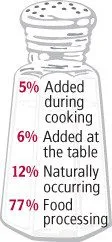
(Image from https://www.health.harvard.edu/newsletter_article/sodium-salt-and-you)
A high-sodium diet draws water into the bloodstream, which can increase the volume of blood and subsequently your blood pressure. Some people are especially sensitive to sodium — their blood pressure rises and falls directly with their sodium intake. High blood pressure (otherwise known as hypertension) makes the heart pump too hard, and can harm arteries and organs (such as the heart, kidneys, brain, and eyes) when the blood flows at a greater force. Uncontrolled high blood pressure can raise the risk of heart attack, heart failure, stroke, kidney disease, and blindness.
Based on the infographic above, it would make sense for us to first cut down on processed food, which makes up of over 70% of our salt intake. Learning how to read the Nutrition Label on processed foods will help us make better choices.
When dining out, we can ask for reduced salt. When preparing meals at home, take note of the salt or sodium content in sauces and other condiments we use, and limit the salt we add into our dishes.
Question: I’m following the supplements list for my condition recommended in MM’s book Cleanse To Heal. There are so many

We all know the benefits of drinking celery juice – the internet is full of articles when you type in